
More users now query conversational AI (ChatGPT, Claude, Gemini) for direct recommendations instead of searching list links on Google. Stay visible by publishing structured, comparison-friendly data, building reviews, and citing objective third-party listings.
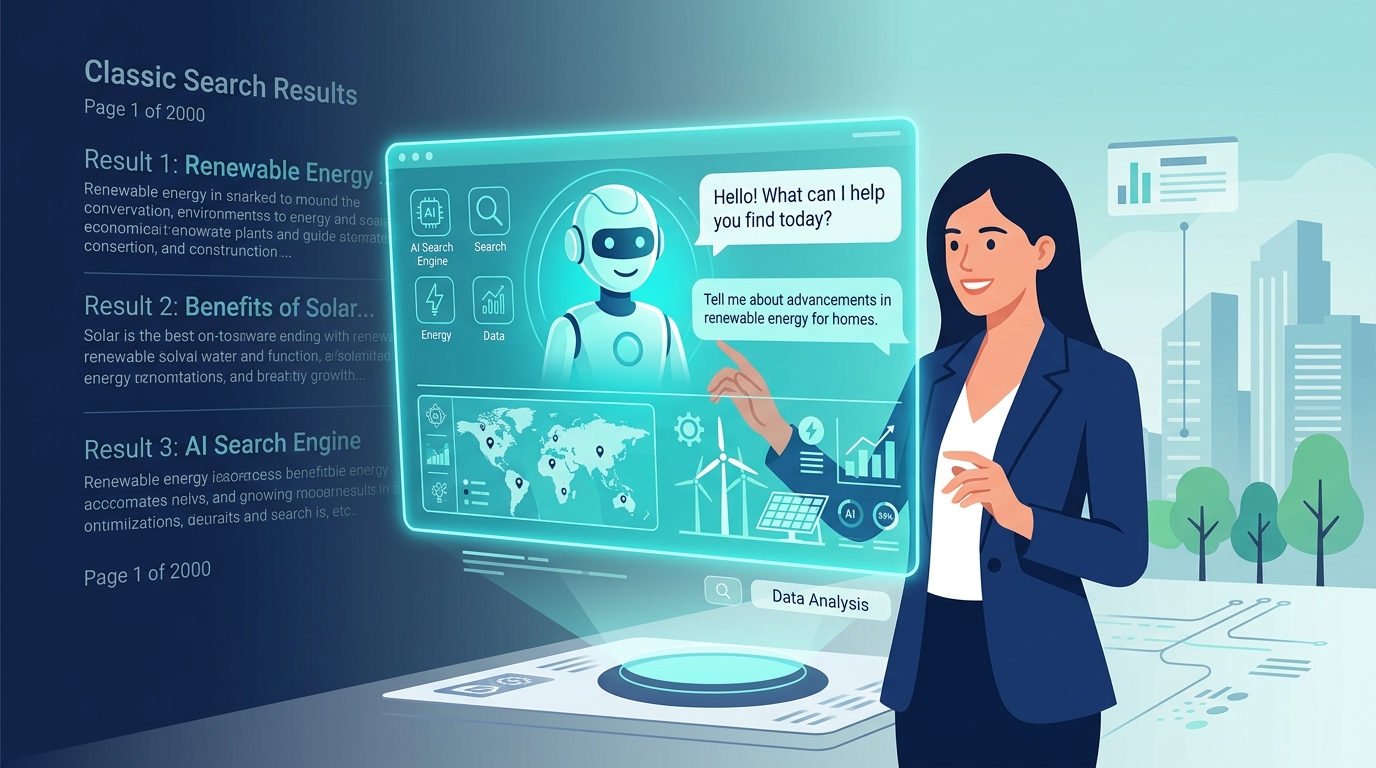
For twenty years, getting found meant one thing: showing up on Google. That is now changing, fast. A growing number of people are skipping the search results entirely and simply asking an AI tool, "Which is the best option for me?"
If your business is invisible to these AI tools, you are missing customers you never even knew you lost. This guide explains what is happening, why it matters, and what you can do about it, in plain language.
What is actually changing
- People used to search Google and compare ten links themselves.
- Now, many ask an AI tool a question and get one clear answer or a short list.
- Tools like ChatGPT, Google's AI answers, and voice assistants are becoming the new starting point.
The big shift: Instead of "let me search and compare," it is becoming "let me just ask, and trust the answer."
Analogy: Google is like a huge library where you look through many books yourself. AI is like asking a knowledgeable friend who reads the answer out to you directly. More and more people prefer just asking the friend.
A real example
Imagine a customer who wants an interior designer.
- The old way: She searches "interior designers in my city", opens ten websites, and compares.
- The new way: She asks an AI tool, "Suggest a good interior designer in my city for a mid-range budget." The AI gives her three names.
If your business is one of those three, you win. If not, you were never even in the running, and the other designers in the city lost too, without knowing why.
What this means for your business
- Being on Google is no longer enough. You also need to be understood and trusted by AI tools.
- The businesses AI knows will win. The ones it does not know simply do not exist in that conversation.
- This is an early opportunity. Most businesses have not noticed this shift yet. Acting now puts you ahead.
The new kinds of "getting found"
You may have seen some new short forms. Here they are in plain English.
- AEO (Answer Engine Optimization): Being the direct answer when someone asks a question, often by voice or in Google's instant answers.
- AIO (AI Optimization): Making sure AI tools know your business exists and understand it correctly.
- GEO (Generative Engine Optimization): Getting AI tools to recommend your business when someone asks who to choose.
Simple way to see it as a chain:
- First, AI must know your business (AIO).
- Then, trust it enough to answer with it (AEO).
- Finally, like it enough to recommend it (GEO).
How to stay visible as customers shift to AI
You cannot directly control what an AI says. But AI tools learn from information about you online. Improve that, and you improve your chances. Focus on:
- Clear, consistent information everywhere. Your business details should match across the web, so AI is not confused.
- Content that answers real questions. Answer the exact questions customers ask about your service, clearly.
- A strong, trustworthy online presence. Reviews, mentions and a solid website tell AI you are real and reputable.
- Structured, readable content. Content organised so both search engines and AI can read and quote it.
In short: be clear, be consistent, be trusted. That is what makes AI confident enough to recommend you.
Does this mean Google SEO is dead?
No. This is important:
- Google is still huge and still matters.
- SEO is still very important, it is expanding to include AI.
- The smart approach is to do both: stay strong on Google, and prepare for AI.
Think of it as: not replacing your Google strategy, but adding a new one alongside it, before your competitors do.