
Many businesses do not own their websites because registration accounts are held under agency names. Ensure domain ownership, choose flexible platforms, keep raw design assets, and host platforms in your own name to avoid vendor lock-in.
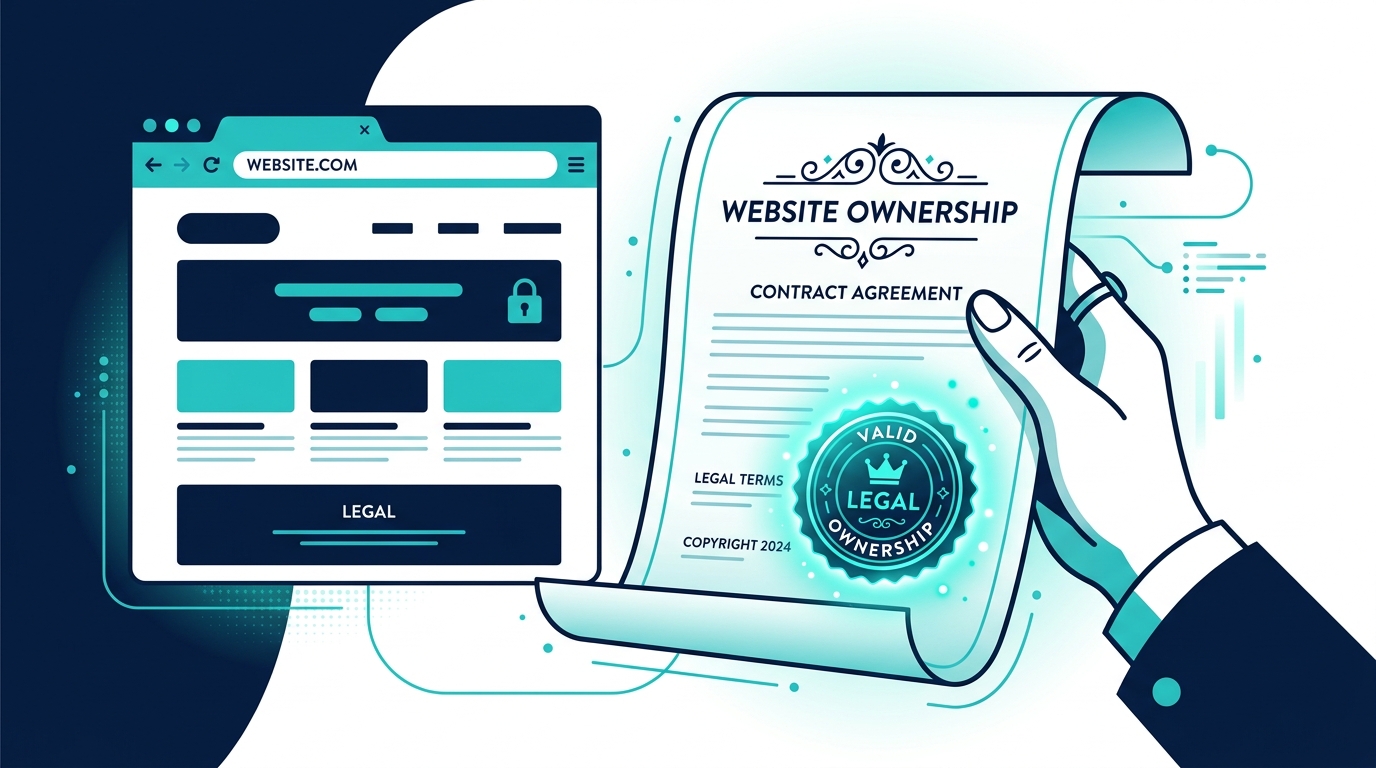
Most business owners assume that if they paid for a website, they own it. Often, that is not true. And the painful part is that many only discover this later, when they try to switch providers, redesign, or move their site, and find they cannot.
This short guide explains what website ownership really means, and the exact questions to ask before you build, so you are never held hostage by your own website.
Why this matters more than you think
- Your website is a business asset, like your shop or your brand name.
- If you do not own it, you are effectively renting something you paid to build.
- The day you want to leave your provider, lack of ownership can cost you time, money, and even your content.
Analogy: Building a website you do not own is like paying to construct a shop on someone else's land. You spent the money, but you cannot take the shop with you, and you can be asked to leave.
The three things you must actually own
Real ownership means owning all three of these. Many businesses only have one or two without realising.
- Your domain name. Your web address, like yourbusiness.in. This should be registered in your name and your account, not your provider's.
- Your website files and design. The actual site: its pages, design and code, should be yours to keep and move.
- Your content and data. Your text, images, and customer enquiry data belong to you.
Common ownership traps in India
Watch out for these situations, which quietly leave you without full ownership.
- Domain registered by the provider. If your web developer registers the domain in their own name, they control your web address, not you.
- Locked website builders. Some cheap providers build your site on a closed system you can never export. Leave them, and you lose the site entirely.
- No access to your own accounts. If you do not have the logins for your domain, hosting and website, you do not truly control them.
- Content held hostage. Some providers refuse to hand over your content or data if you decide to move on.
Questions to ask before you build
Ask these clearly, before any money changes hands. A trustworthy provider will answer yes without hesitation.
- Will the domain be registered in my name and my account?
- Will I have full access to my domain, hosting and website logins?
- If I leave, can I take my complete website and content with me?
- Is the website built on a system I can move to another provider?
- Do I own all the content, images and data on the site?
Tip: Get the answers in writing, in your agreement or email. Clear terms now prevent painful surprises later.
What good ownership looks like
When ownership is done right:
- The domain is in your name, and you hold the login.
- You have access to your website and hosting accounts.
- You can move your website to another provider anytime, with no penalty.
- Your content and data are fully yours.
- You are never locked in. You stay because you own your website and want to, not because you are trapped.